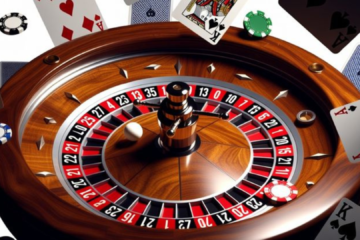
Casinous winning strategies can help players make more informed gambling decisions, but can they guarantee consistent profits? Many casino enthusiasts look for betting systems that promise predictable results. Others believe careful bankroll management or mathematical techniques can overcome the house edge. However, casino games involve probabilities, and no strategy can remove every element of risk. Understanding these limitations helps players enjoy gambling without relying on unrealistic promises.
For anyone exploring different online casino games, the distinction between improving decisions and guaranteeing wins matters. A strategy may help control spending, structure bets, or make gameplay more disciplined. Nevertheless, it cannot change the underlying mathematics of a game. Players should understand what a system can achieve before putting money behind it.
What Casinous Winning Strategies Can Actually Achieve
A casino strategy is a planned approach to making gambling decisions. It might involve choosing bet sizes, setting session limits, selecting games, or following a particular betting pattern. Some systems also use mathematical principles to guide decisions during gameplay.
These methods can provide structure. For example, a player might decide to wager a fixed percentage of their available bankroll rather than making impulsive bets. Another might set a loss limit before starting a session. Both approaches can make gambling more controlled.
However, structure should not be confused with certainty. A strategy can influence how someone manages their money, but it cannot dictate the outcome of a random event. Even experienced players encounter losing streaks despite following carefully planned systems.
Therefore, Casinous winning strategies are best understood as decision-making tools. They can help players recognise risks and avoid emotional betting. They cannot turn a game with unfavourable mathematical odds into a guaranteed source of income.
Better decisions are not guaranteed profits
Consider a player who uses a fixed betting amount throughout a roulette session. This approach makes spending easier to track. It also prevents sudden increases in stakes after losses.
Nevertheless, the player can still lose every bet. The system controls the size and frequency of wagers, not the result of each spin. That distinction applies to many casino games.
Random Outcomes Limit Casinous Winning Strategies
Randomness is one of the main reasons betting systems cannot guarantee results. In games that use random number generators, each outcome is produced independently according to the game’s programming and mathematical design.
For example, a properly functioning online slot does not remember whether someone won on the previous spin. A long sequence of losses does not make a winning combination automatically more likely on the next attempt. Each spin follows the game’s established probability model.
This principle is often misunderstood through the gambler’s fallacy. It occurs when someone assumes that a particular outcome becomes more likely simply because it has not appeared recently.
Imagine a player sees red appear repeatedly on a roulette wheel. They might decide black is now overdue. However, previous results do not create an obligation for the next spin. The wheel’s probabilities remain unchanged.
Why previous results cannot predict every outcome
Tracking results can still be useful for reviewing personal behaviour. A player might notice that they increase their stakes after several losses or continue playing beyond their intended session. Identifying these patterns can support better decisions.
However, historical results should not be treated as reliable predictions. A record of previous slot spins cannot reveal when a bonus round will occur. Similarly, past roulette outcomes cannot identify the next winning number.
Consequently, Casinous winning strategies should account for uncertainty instead of pretending to eliminate it. Players who understand randomness are less likely to chase losses or trust systems built around supposed winning patterns.
The House Edge and Its Effect on Casino Strategies
The house edge represents the mathematical advantage an operator holds in a casino game over the long term. It is built into the rules and payout structure. Although individual sessions can produce very different results, the house edge influences expected outcomes across many rounds.
For instance, a roulette game may offer several betting options with different probabilities and payouts. A single-number bet can deliver a large payout, but it has a relatively low chance of winning. An even-money bet wins more frequently, although its payout is smaller.
The exact house edge depends on the game’s rules. European roulette generally has a lower house edge than American roulette because it has one green zero rather than two. That difference affects the mathematical expectation of each wager.
Understanding these figures helps players compare games more intelligently. However, choosing a lower-house-edge option does not guarantee a profitable session. It simply means the mathematical disadvantage is generally smaller under the stated rules.
Can a betting system overcome the house edge?
Popular systems such as Martingale, Fibonacci, and D’Alembert attempt to manage bet sizes through predetermined sequences. They can make wagering feel more systematic. However, none removes the house edge.
The Martingale system, for example, involves increasing a stake after every loss. The player aims to recover previous losses with one eventual win. In theory, this may appear straightforward when the bankroll and betting limits are unlimited.
Real casino conditions are different. Players have finite funds, while casinos impose maximum bet limits. A long losing sequence can therefore require stakes that exceed either the player’s budget or the table limit.
Moreover, even a winning bet may recover only a small amount relative to the money risked. The system changes the distribution of potential wins and losses. It does not create a mathematical advantage for the player.
Risk Management Makes Casinous Winning Strategies More Practical
Although no system guarantees profits, risk management can make gambling more responsible. It focuses on protecting a player’s budget rather than predicting winning outcomes. This is particularly useful for people who enjoy regular casino sessions.
Start by deciding how much money you can comfortably afford to lose. Treat that amount as entertainment spending, not an investment. Essential expenses, savings, rent, and debt repayments should never form part of a gambling bankroll.
Next, establish a session limit. A player might choose a fixed amount for one evening and stop when it is gone. This prevents an ordinary losing session from becoming an expensive attempt to recover money.
Time limits are equally important. Long sessions can encourage tired decisions and reduce awareness of spending. Taking breaks helps players reassess their behaviour before continuing.
Practical ways to control betting risks
Several simple habits can support more disciplined play:
- Set a fixed budget: Decide on an affordable gambling amount before opening a game.
- Choose consistent stakes: Avoid increasing bets emotionally after losses.
- Set a stopping point: Decide when to finish, regardless of whether the session is positive or negative.
- Avoid chasing losses: Do not treat additional wagers as a reliable way to recover previous spending.
- Track spending: Review deposits, withdrawals, and gambling activity to maintain awareness.
- Take regular breaks: Step away when concentration or emotional control starts to decline.
These habits do not guarantee a winning balance. Instead, they help players keep gambling within limits they have chosen in advance. That is a more realistic benefit than any promise of a foolproof betting formula.
Game Selection and Mathematical Probabilities
Not all casino games have the same mathematical structure. Some involve decisions that can influence the probability of particular outcomes. Others rely almost entirely on random events.
Blackjack is a useful example. Players can use basic strategy charts to make mathematically informed decisions based on their hand and the dealer’s visible card. Following an appropriate strategy can reduce the house edge compared with making decisions randomly.
However, basic strategy does not guarantee that a particular hand will win. The cards dealt still determine the outcome. Even a mathematically sound decision can lead to a losing result.
Poker presents a different situation because players compete against one another. Skill, experience, and strategic decisions can influence long-term performance. Even so, variance remains significant, and short-term results can differ considerably from expectations.
Slots generally offer fewer opportunities for strategic influence. Players can compare return-to-player percentages, volatility, and game rules. Yet these details describe mathematical characteristics rather than predicting the next result.
RTP and volatility are not promises
Return to player, commonly called RTP, represents a theoretical percentage of wagers a game is designed to return over a very large number of plays. A game with a 96% RTP has a theoretical return of 96 units for every 100 wagered across its mathematical sample.
That figure does not mean a player will receive 96% of their money back during an individual session. Actual results can vary substantially. Someone might win more than expected, lose quickly, or experience several different outcomes over time.
Volatility also affects the playing experience. Lower-volatility games generally produce smaller, more frequent payouts, while higher-volatility games may offer larger but less frequent wins. Neither type guarantees a favourable result.
Fast Withdrawals Do Not Change Winning Probabilities
Payment speed is an important consideration for casino players, particularly when they want access to legitimate winnings without unnecessary delays. However, withdrawal processing has no influence on the mathematical outcome of a casino game.
Players should evaluate payment conditions separately from betting strategies. Before depositing, check the available withdrawal methods, minimum and maximum transaction amounts, processing times, and verification requirements.
Some payment methods may process eligible withdrawals faster than others. Nevertheless, the operator might need to complete identity checks or additional security reviews before releasing funds. Banking providers can also introduce delays after the casino approves a transaction.
Account details should match the player’s verified identity. Inconsistent information can lead to extra checks, while incomplete documents may delay processing. Reading the cashier terms before depositing helps avoid preventable problems.
Therefore, a sensible casino approach considers two separate questions: how a game works mathematically and how the operator handles payments. A betting system cannot guarantee profits, while a fast withdrawal method cannot make an uncertain outcome more predictable.
Recognising Unrealistic Casino Strategy Claims
Players should be cautious whenever a betting system claims to deliver guaranteed wins. Such claims often rely on selective examples, misleading calculations, or assumptions that do not reflect actual casino conditions.
For instance, a strategy promoter might show a sequence where a player recovers several losses through progressively larger bets. However, that example may ignore the bankroll needed to survive a longer losing streak. It might also overlook table limits and the possibility of losing the entire available balance.
Other systems claim to identify patterns in slot results or predict roulette numbers. These claims deserve particular scrutiny. Random outcomes cannot be reliably forecast through ordinary observation of previous results.
Reliable information should explain the assumptions behind a strategy. It should also acknowledge possible losses, mathematical limitations, and the conditions under which a method might fail. If a claim promises risk-free gambling, players should question its credibility.
Making Casinous Winning Strategies Part of Responsible Play
The most useful gambling strategy begins with realistic expectations. Casino games are designed for entertainment, and their mathematical structures generally favour the operator over extended play. Recognising this fact helps players make decisions without expecting guaranteed income.
Casinous winning strategies can still offer practical value when they focus on discipline. A budget, consistent stakes, an understanding of game probabilities, and clear stopping rules can improve the overall experience. These measures also make it easier to recognise when gambling is no longer enjoyable.
Players should never borrow money to gamble or increase stakes to recover losses. If gambling starts affecting finances, relationships, sleep, or daily responsibilities, taking a break is important. Gambling support services and account limits can also help people regain control.
Ultimately, no betting system can eliminate randomness or guarantee winning results. Mathematical knowledge can help players understand their chances, while risk management can limit avoidable harm. The smartest approach is to enjoy casino games within an affordable budget and treat every wager as uncertain.